Quantum Computing and Finance: What It Can and Cannot Do Today
Can a quantum computer predict the stock market, crack every password, and make ordinary computers useless overnight? If you have read headlines about quantum computing lately, you might think the answer is yes, and that the financial world is about to be turned upside down. The honest answer is more interesting, and much less dramatic. Quantum computers are real machines, researchers are testing them on real finance problems, and the results so far are modest. This guide explains what the technology actually is, where it stands today, what finance teams are really doing with it, and what is worth watching without the hype.
What Is a Quantum Computer?
An ordinary computer stores information in bits. Each bit is either a 0 or a 1. Your laptop, your phone, and the servers that run a bank all work this way, flipping billions of bits to do their work. A quantum computer stores information in quantum bits, usually called qubits. A qubit can be in a state that is a blend of 0 and 1 at the same time, a property called superposition. Qubits can also be linked together in a way that has no everyday equivalent, called entanglement. When qubits are linked this way, changing one can affect the others, even though each qubit is a separate physical object.
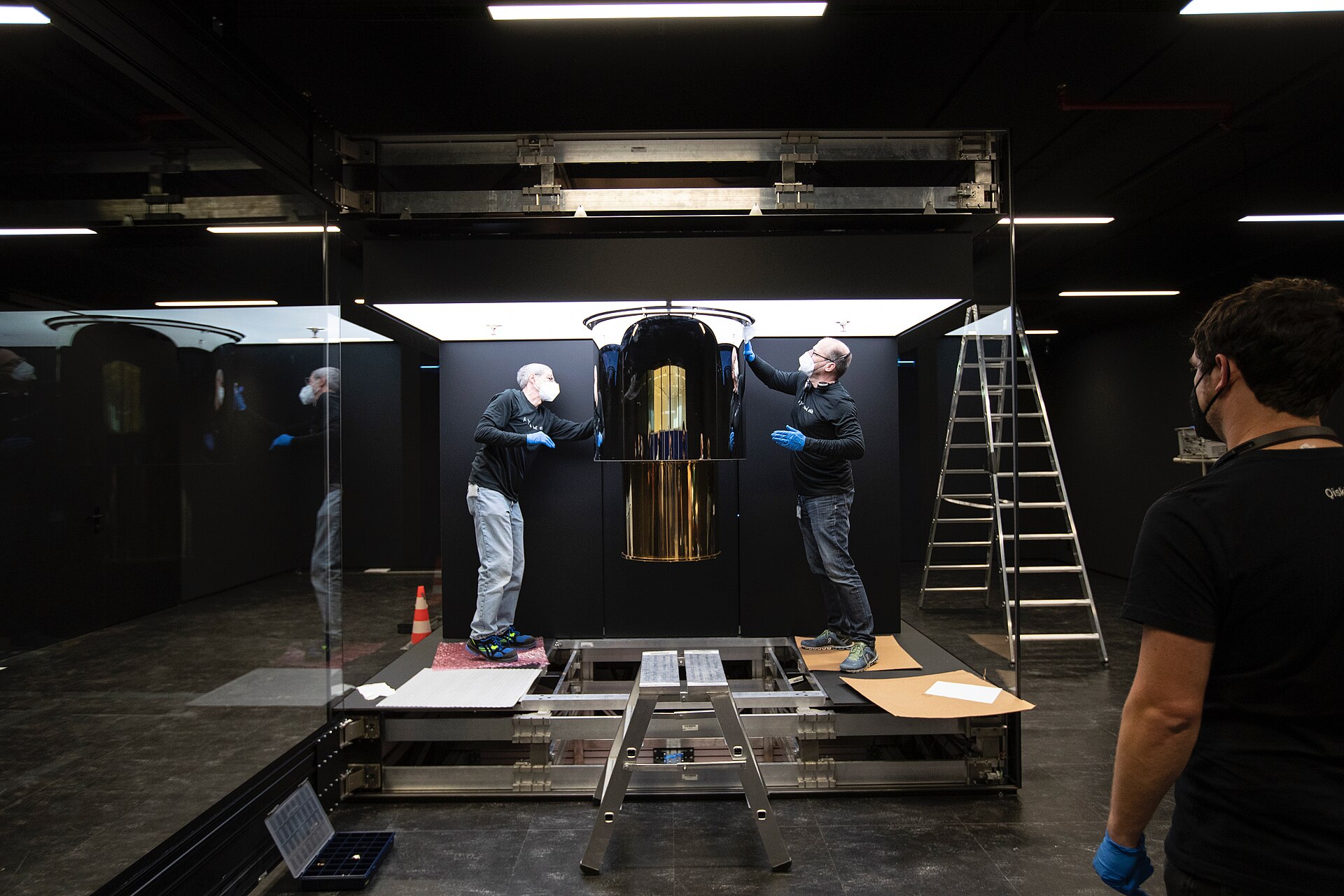
That sounds like magic, and the language around it often makes it sound that way. It is not magic. It is physics, and it is hard physics. Qubits have to be kept extremely cold, shielded from vibration and stray signals, and controlled with great care. The machines that do this look less like laptops and more like chandeliers made of gold-coloured metal hanging inside a giant refrigerator. They are research instruments, not products you can buy and put on a desk.
Why would anyone bother? Because some kinds of problems are very hard for ordinary computers, and quantum computers may one day handle some of them differently. The key word is some. A quantum computer is not a faster version of your laptop. It will not load a spreadsheet more quickly or run your email better. It is a specialised tool that may, for certain narrow types of maths, find an answer using a different route than a normal computer would take.
Where the Machines Are Today
The honest starting point is that no one has a large, reliable, general-purpose quantum computer yet. The machines that exist today are called noisy intermediate-scale quantum machines, often shortened to NISQ machines. The word noisy matters. Qubits are fragile. They lose their quantum state quickly, and small disturbances cause errors. A calculation that needs thousands of steps can fall apart because the qubits simply do not stay stable long enough.
Today's machines have tens to hundreds of qubits, depending on the design, but only a small number of those qubits can be used together reliably for a useful calculation. Error rates are high enough that researchers spend a large part of their effort just trying to check whether the answer a machine gives is right. In many tests, a well-programmed ordinary computer still beats a quantum machine, either by being faster or by giving a more reliable answer.
The goal researchers talk about is called fault-tolerant quantum computing. A fault-tolerant machine would correct its own errors as it runs, the way your phone corrects small glitches in a signal without you noticing. Nobody has built one yet. Building one will probably need far more physical qubits than today's machines have, because many physical qubits would be needed to make a single reliable, error-corrected logical qubit. The gap is large, and closing it is a matter of years of steady engineering, not a single breakthrough announcement. So when you read that a company has built a quantum computer with a certain number of qubits, that number alone does not tell you much. What matters is how many of those qubits can work together, how low the error rate is, and whether the machine can run a calculation that is actually useful.
The Encryption Question Everyone Asks
The question that worries people most is whether quantum computers will break the encryption that protects bank accounts, messages, and online shopping. The concern is real, and it has a name you may have seen: the idea that someone could collect encrypted data today and decrypt it later, once a powerful enough quantum computer exists. That is a genuine worry for governments and banks, because some information needs to stay secret for decades.
Here is the current position. No quantum machine built so far can break the encryption used today. Breaking it would need a large fault-tolerant machine running a specific algorithm, and that machine does not exist. Researchers disagree about when, or even whether, such a machine will arrive. Some think it could be decades away. Others think it may never reach the scale needed for this particular job.
That uncertainty is exactly why banks, governments, and standards bodies are already working on new encryption methods designed to resist quantum attacks. These are called post-quantum or quantum-resistant methods, and the work is happening now because switching the world's encryption takes years. For you as a reader, the practical point is simple. Your bank account is not about to be emptied by a quantum computer tomorrow morning. The risk is a long-term planning problem for institutions, not an emergency for individuals, and you do not need to change your passwords because of quantum computing.
What Finance Researchers Are Actually Testing
Finance is one of the fields most often mentioned in quantum computing press releases. Banks and research teams are running experiments, and it is worth knowing what those experiments actually involve, because the reality is narrower than the headlines suggest.
Portfolio optimisation
One common test is portfolio optimisation. An investor holds a mix of assets and wants the best balance of return and risk, within certain limits. With a small number of assets, an ordinary computer can solve this quickly. With many assets and many rules, the number of possible combinations grows fast, and the problem gets harder. Researchers test whether quantum methods can explore these combinations in a useful way. So far, the tests use small, simplified versions of the problem, and ordinary computers still handle the real-sized versions better. The research is real, but it is early-stage testing, not a tool a fund manager can use today.
Monte Carlo simulation
Another area is Monte Carlo simulation. Banks use this technique to model risk. They run thousands or millions of random scenarios to estimate how a portfolio might behave, how likely a loss of a certain size is, or how a derivative might be priced. Quantum researchers have proposed methods that could, in theory, need fewer runs to reach a similar level of accuracy. The word in theory does heavy lifting here. The proposed speed advantage only appears on a fault-tolerant machine, and it also depends on the details of the problem. Small-scale demonstrations exist, but they do not yet beat the fast, well-tuned systems banks already run.
Machine learning and pattern finding
A third area is machine learning. Some teams are testing whether quantum methods could help find patterns in financial data, for example in fraud detection or in sorting market data. This is the least settled area of all. Early results are mixed, and there is open debate among researchers about whether quantum machine learning will offer any real advantage for the kinds of messy, noisy data that finance actually produces. Data in finance is full of gaps, errors, and shifting patterns. A quantum method that works neatly on clean test data may not survive contact with real market data.
What the experiments have in common
Notice what these three areas share. The work is done by research teams, often in partnership between a bank and a quantum hardware company. The problems are small and simplified. The results are published as papers and demonstrations, not as products. And in nearly every case, the ordinary computer remains the tool doing the real work. Quantum computing in finance today is a research programme, not a production system.
Hype vs Reality
Why does the gap between headlines and reality exist? Partly because quantum computing is genuinely exciting science, and excitement sells. Partly because companies that build quantum hardware need investment, and bold claims attract investment. And partly because finance is a field where a small edge can be worth a great deal of money, so even a hint of an advantage gets attention.
Here are some claims you may see, and what to make of them.
- "A quantum computer solved a finance problem in seconds that would take a normal computer years." Read the fine print. These claims usually involve a specially chosen problem, a small test case, or a comparison against a slow or badly tuned ordinary method. A fair comparison uses the best ordinary method available, not the weakest.
- "Quantum computing will make markets perfectly predictable." It will not. Markets are driven by human decisions, news, politics, and events no computer can foresee. Even a perfect calculator cannot predict what has not happened yet. Quantum computing, even at its best, is a way of doing certain calculations differently. It is not a crystal ball.
- "Quantum advantage has been achieved." This phrase has a technical meaning: a quantum machine did a specific task faster than the best known ordinary method. That has happened for a few carefully chosen tasks. None of those tasks was a real finance problem at production scale. Achieving an advantage on a test problem and being useful to a bank are two very different things.
The pattern to watch for is the jump from a laboratory result to a business claim. A laboratory result is interesting and worth reporting. A business claim needs evidence that the result works at real scale, reliably, and at a cost that makes sense. That evidence is missing so far.
What Is Genuinely Worth Watching
None of this means quantum computing is a dead end or a waste of time. It is a serious field, and several developments are genuinely worth following.
First, error correction. The single most important measure of progress is not the number of qubits, but whether researchers can make qubits reliable enough to run long calculations. Watch for demonstrations where a logical qubit, built from many physical qubits, lasts longer and makes fewer errors than a single physical qubit. That is the step that turns a noisy machine into a trustworthy one.
Second, honest benchmarks. Watch for tests where a quantum machine is compared against the best ordinary methods on problems that look like real finance work, at sizes that matter. A result that beats a well-tuned ordinary computer on a realistic problem would be a genuine milestone. So far, that milestone has not been reached for finance.
Third, the move from demos to pilots. At some point, a bank may run a quantum method alongside its existing system on a real, limited problem and report the results openly. That kind of pilot, with real data and real comparison, would tell us far more than any press release.
Fourth, post-quantum encryption standards. The shift to new encryption methods is already under way, and it will affect banks, governments, and software companies over the coming years. It is a quiet, practical story, and it matters more to your everyday security than any headline about a quantum breakthrough.
What This Means for You
If you are a student, a curious reader, or someone thinking about a career, quantum computing is a fascinating field to learn about, and finance is one of its most interesting test areas. The skills that matter are the ordinary ones: maths, programming, statistics, and a clear understanding of how financial markets actually work. No one needs to panic, and no one needs to rush to buy a quantum product. There is very little to buy.
If you are an investor, be careful with any company or fund that promises quantum-powered returns. Ask what the machine actually does, what it is compared against, and whether any customer uses it for real work. If the answers are vague, the promise is probably ahead of the evidence.
Quantum computing may one day change parts of finance. It may speed up certain kinds of risk calculation, help with complex optimisation, or open up new ways of modelling markets. It may also turn out to be less useful for finance than hoped, while proving valuable in other fields such as chemistry or materials science, where the maths fits the machine better. Both outcomes are possible, and honest researchers will tell you so. The technology deserves your attention and your patience, but not your fear and not your blind faith.
Disclaimer: This article is educational only and is not financial advice. It explains a developing technology in general terms and does not recommend any investment, product, or course of action.